Dining in the Devil’s Arse
The diabolical folklore of Peak Cavern

Cock Lorel would needs have the devil his guest,
And bid him once into the Peak for dinner,
Where fiend had never such a feast
Provided him yet at the charge of a sinner.
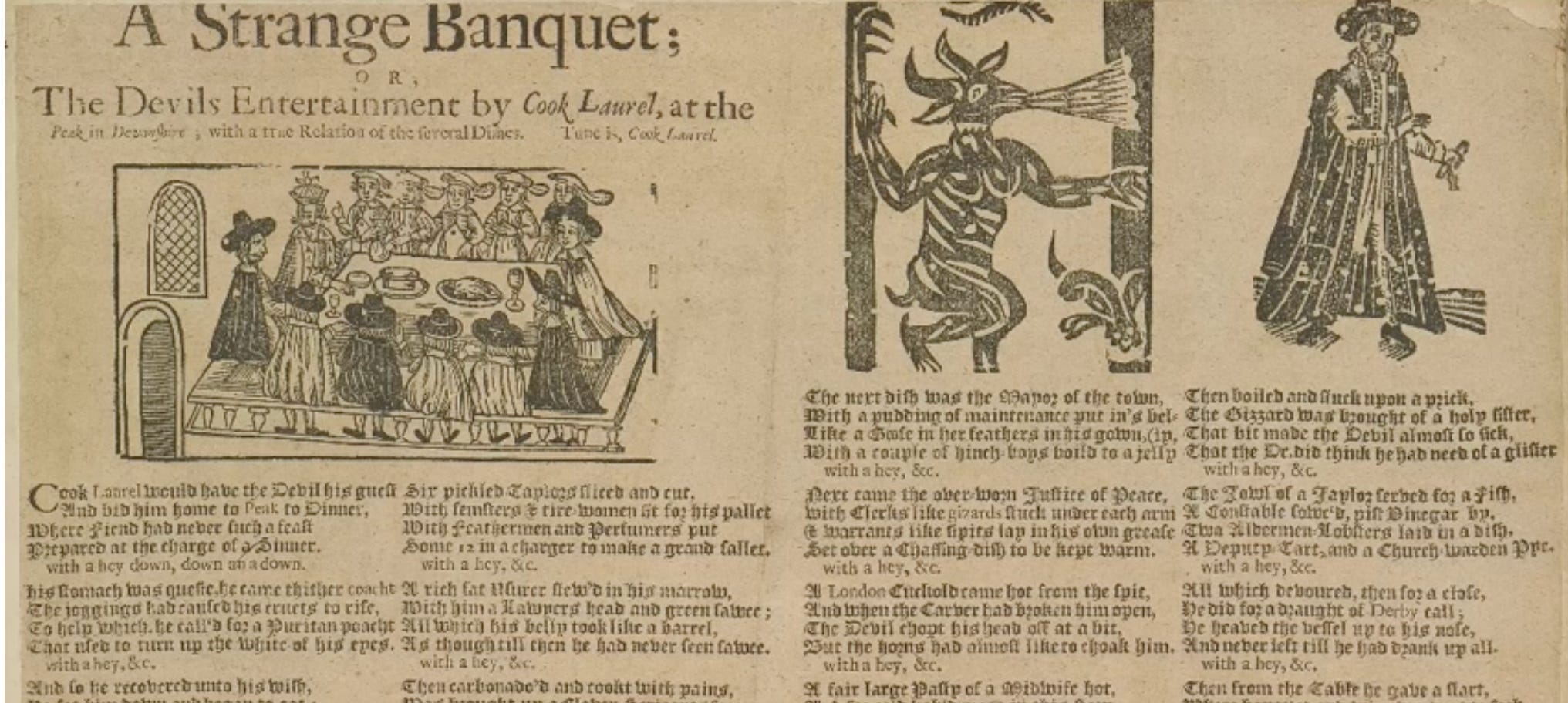
Ben Jonson’s satirical ditty, composed for a masque in 1621 and later circulated independently, describes the macabre meal served by the arch-rogue, Cock Laurel, to the devil. It takes place inside one of Derbyshire’s most famous caves, Peak Cavern. Among the delicacies consumed by the devil are a salad of fashion-mongers, roasted lecher’s loins with garlic harlot, mayor stuffed with a pudding of maintenance, sauced constable, alderman lobsters and church-warden pie: from low to high, few parts of society escape unscathed (or unbaked). Having absorbed humanity’s ills into his body, the devil rises from the banquet table and blows it away with a great fart, ‘and so [the cave is] call’d the Devil’s arse in the Peak.’
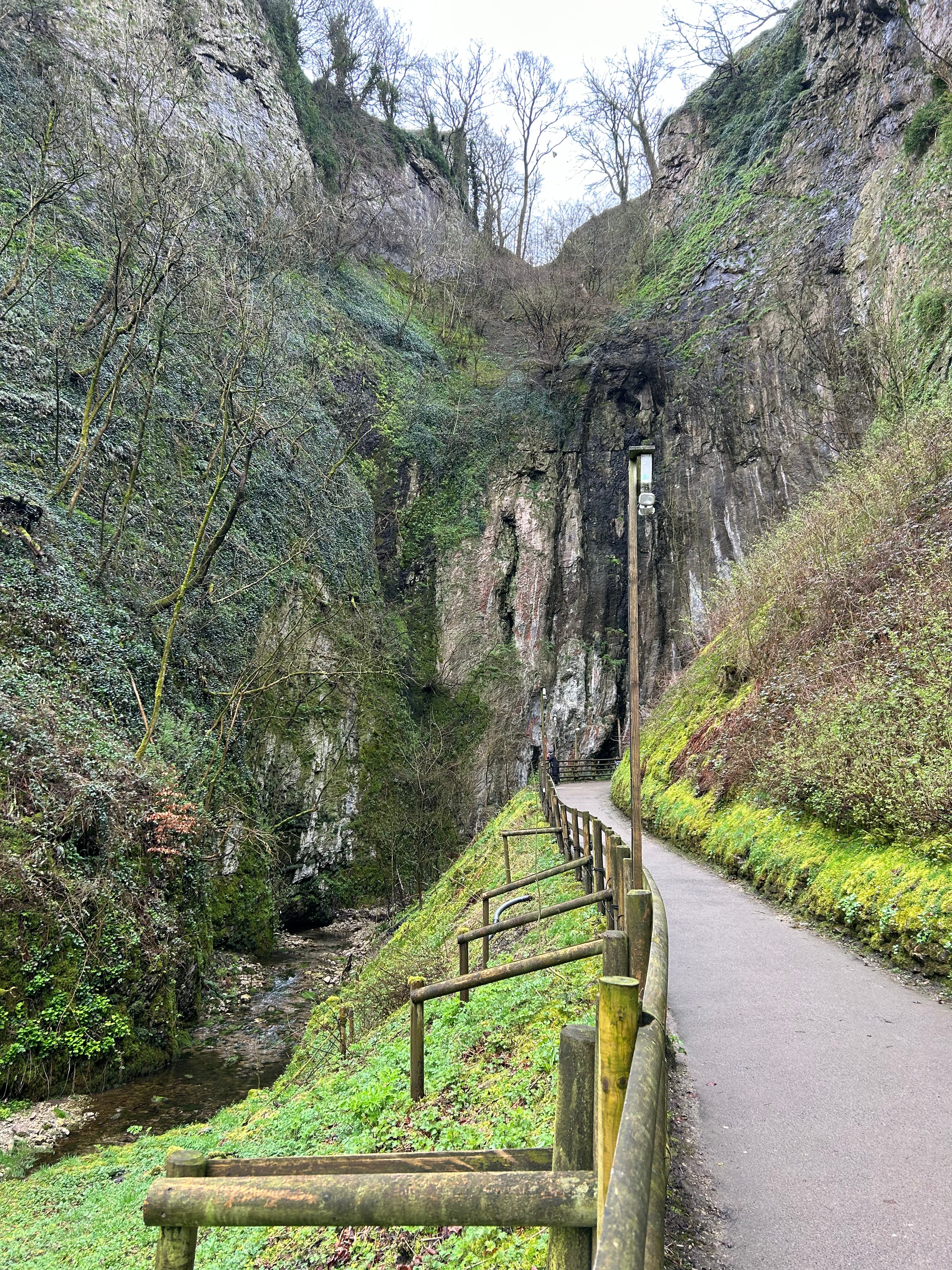
Peak Cavern, however, was known by that cheeky appellation long before Jonson wrote his ballad. The Doomsday Book situates Peveril Castle ‘in peches ers’: on the Peak’s arse. In his 1586 survey of Great Britain and Ireland, William Camden records, ‘there is a cave or hole within the ground called, saving your reverence, The Devils Arse, that gapeth with a wide mouth.’ Thomas Hobbes, in his Wonders of the Peak, gives it the Latin title, ‘Plutonis ad anum’ or ‘Peak’s ars’ to the natives.
The scatological associations were too tempting for some authors, especially Edward Browne, who went all in for the extended metaphor in 1662:
Wee beheld a vast hole or den which was presently understood by us to bee the anus, into which by the helpe of light and guides wee did not onely enter, but travailed some space up the intestinum rectum, and had made further discovery of the intralls had the way been good, and the passage void of excrement; but the monster having drunke hard the day before, did vent as fast now…
The floodwaters (‘excrement’) go some way towards explaining the cave’s crude name. When the water and air in the flooded chambers recede, they create a sucking noise that could be interpreted as… well, someone letting rip. The devil, having long been associated with caves, barrows and ditches, and not exactly being renowned for his good manners, was quickly identified as the culprit.
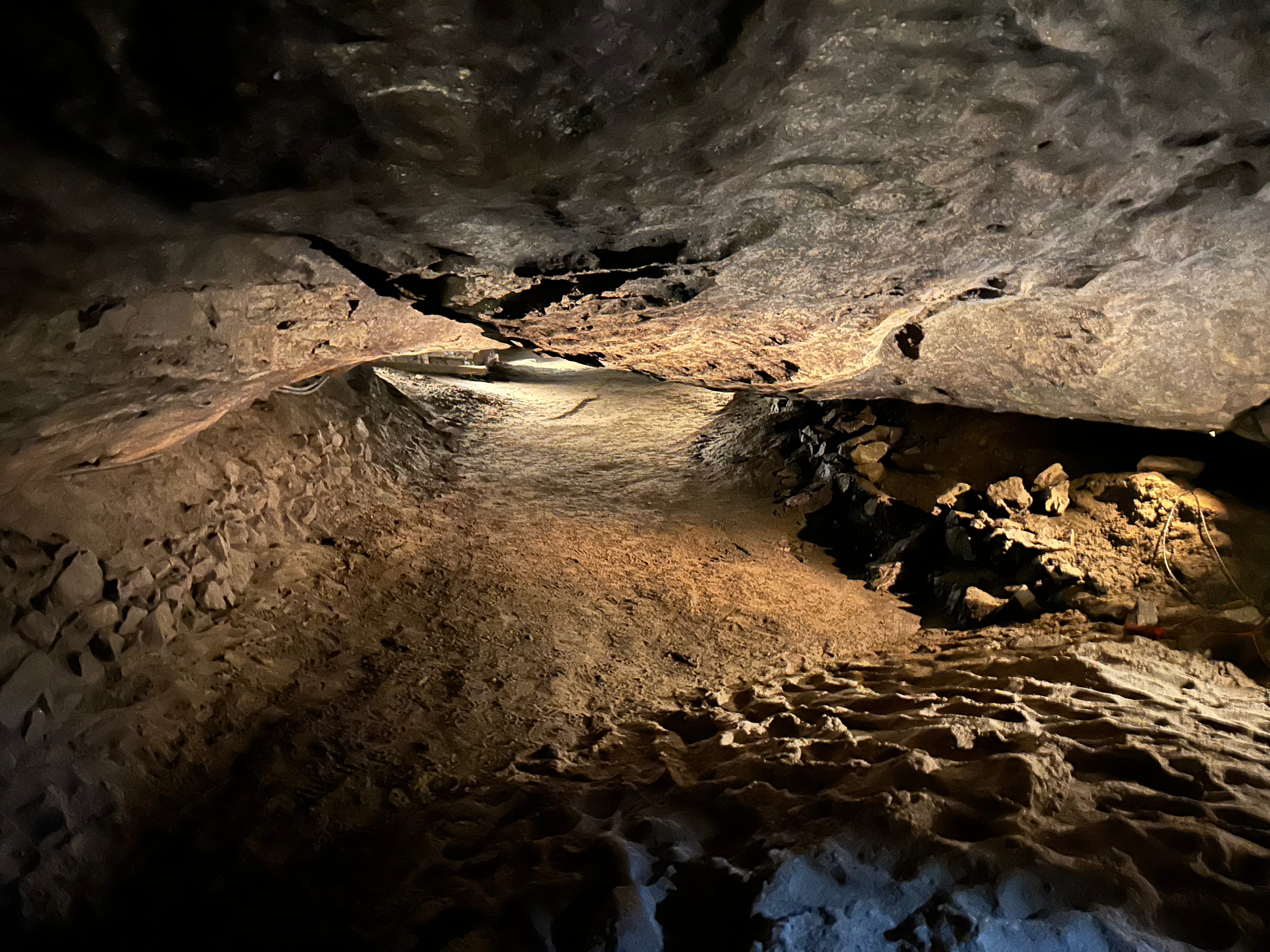
But the cave’s Satanic heritage goes deeper than that—literally. A large chamber, known as Pluto’s Dining Room, leads down to the Devil’s Cellar. Before 1989, visitors could descend the Devil’s Staircase and cross an underground stream, the Styx, named after one of the rivers that flowed through the Underworld in Greek mythology. Since then, this section has been closed on safety grounds, but experienced cavers can venture further. In 1999, explorers discovered the deepest shaft of any known cave in Britain—Titan, which has a depth of 141.5 metres or 464 feet. Imagine the Guitar Hotel in Hollywood, and then stretch it a bit.
Dye tracing has revealed that the Peak Cavern system is connected to Eldon Hole, the deepest natural pothole in the region, portrayed as the entrance to Hell in Early Modern texts, including Hobbes’ Wonders of the Peak. A well-known Derbyshire tale describes how an old woman’s goose was thrown down Eldon Hole and emerged from the mouth of Peak Cavern days later, its feathers charred by hellfire. This is a good example of folklore supplying facts before they were proven by scientific testing and exploration, and also another instance of Peak Cavern’s diabolical nature.
Any deep subterranean space taps into a primal dread of darkness, flood water, sudden drops and passages that squeeze your insides out, and Peak Cavern is one of the deepest. Little wonder that Carl Moritz described the cave as ‘an abode of silent horror’ in 1782. The network of caverns and tunnels is vast, extending to 17.75 km. To travel from one end to the other is to take one of the deepest through-trips in the British Isles. The map of the system is fraught with names such as Whirlpool Rising, Assault Course and Bottomless Pit.
Though Moss Chamber sounds fairly innocuous, it has the most disturbing story of all behind it. In 1959, twenty-year-old Neil Moss became stuck down a shaft forty feet deep. Numerous attempts to deliver oxygen to Moss, pull him out of danger and widen the shaft followed. Yet Moss repeatedly became stuck, even after moving a few inches, and the air was too foul for the rescuers to remain down there for very long. One of the men who tried to rescue Moss, John Larson, commented: ‘The carbon dioxide fumes make you lightheaded, and you think you see elephants and fairies.’ Sadly, Moss died from CO2 inhalation. His body was left in situ and the shaft filled with rocks to prevent others from repeating that fatal journey into the realm of the dead.
Larson’s reference to fairies is chillingly apposite, given Peak Cavern’s history as an access point to the Otherworld. Gervase of Tilbury, writing in 1211, recounts the tale he heard from a Peak District native, Robert, prior of Kenilworth. One winter, a swineherd went searching for his lost, pregnant sow in Peak Cavern. Deep underground, he discovered a bright open field with harvesters reaping corn. The pig was there, safe and sound, having birthed her piglets. When the swineherd returned to the Derbyshire daylight, pigs in tow, it was still winter. While Gervase entitles his tale, ‘The Antipodes and their land,’ readers have interpreted the story as one pertaining to fairy folk, rather than Australians. It is one of several from the high Middle Ages that involves someone finding the Otherworld through a cave, tunnel, barrow or hill.
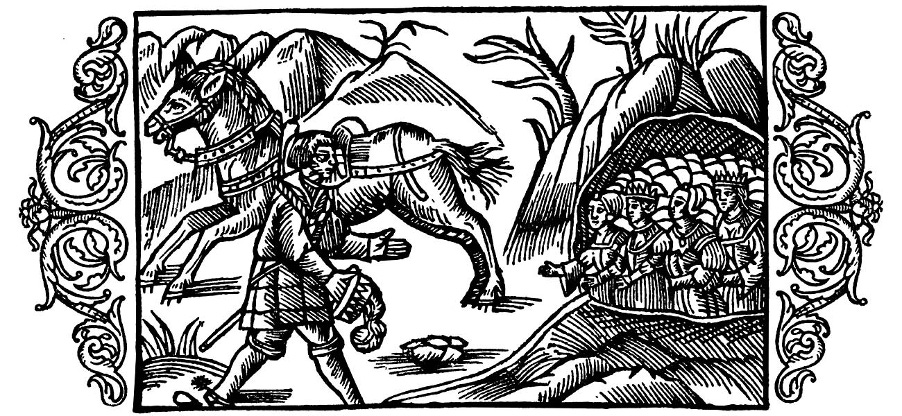
Later encounters with the realm of Fairy often take place at hillsides. In the seventeenth century, a man was brought to trial, accused of conjuration after he claimed to have met the queen of fairies in a great hall in a hill and accepted a gift of healing powder from her. While suspicious, this foray into Fairy is not devilish. Fairies may have been seen as deceptions perpetuated by the devil in seventeenth-century Protestantism, but the mysterious and mischievous beings themselves were seldom viewed as demons.
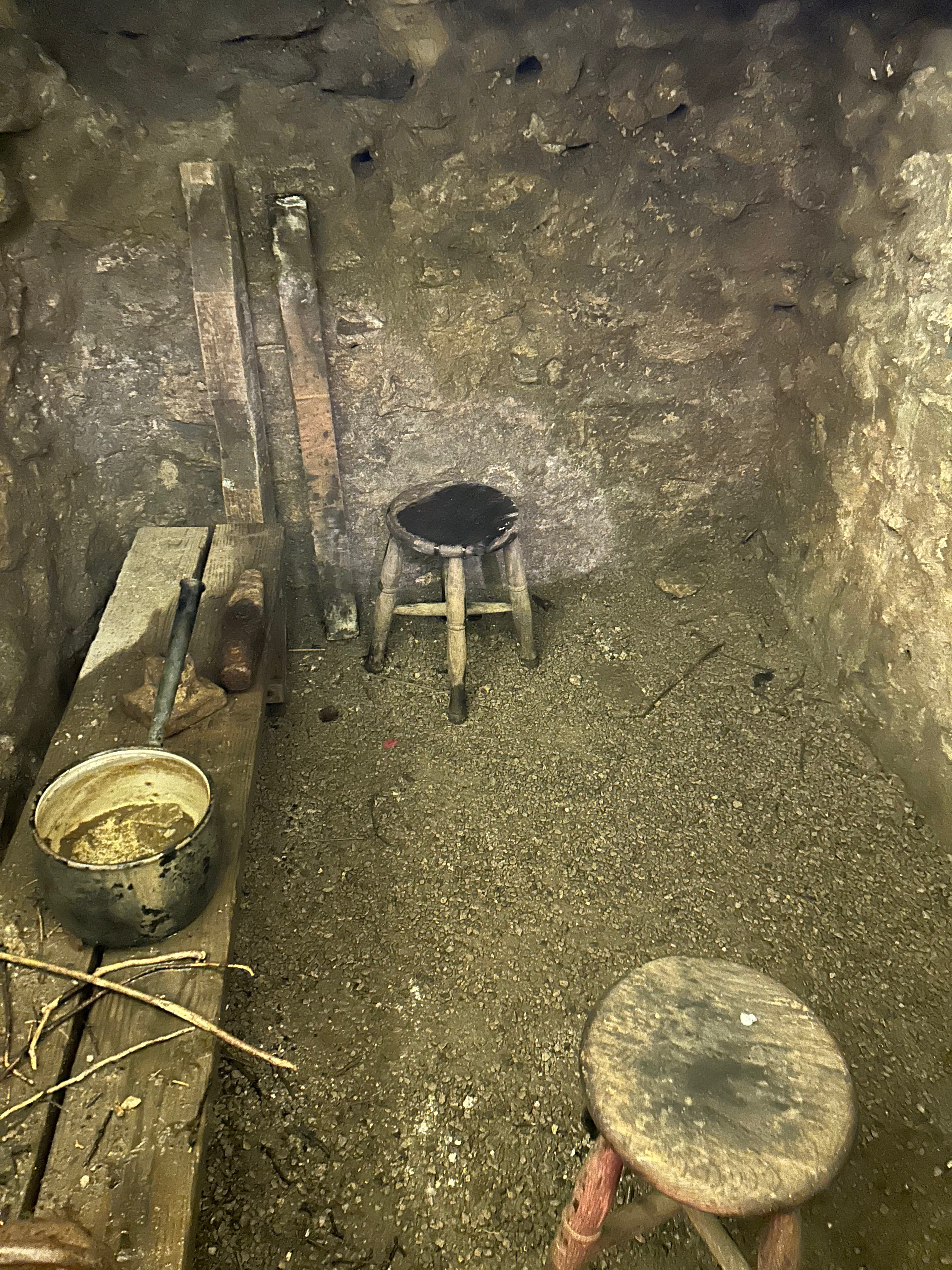
To the modern visitor of Peak Cavern, the cave’s diabolical and magical cultural history is far less evident than its more tangible human heritage. From around 1650, craftspeople who supplied rope for use in the mines were permitted to live and work in the mouth of the cave without paying rent. These dwellers, known as troglodytes, built tiny cottages and would guide visitors into the depths for a small price.
Despite being a vital part of the Peak economy, well-heeled travellers viewed them as sub-human. Our friend, Edward Browne, continuing his extended bowel metaphor, debates:
Whither they were onely Ascarides, which did wriggle up and downe and live in the devil’s postern, answerably to wormes in men, or whither they were shades dwelling in these Tartarean caverns…
The cave-dwellers, thwarting Browne’s attempts to understand them as part of any known social hierarchy, become abjected and infected with the language of devilry, dirt and death. As in Jonson’s ballad of Cock Laurel, social undesirables are absorbed into the body of Satan himself in order to create a distinction between the ordered, rational domain of daylight above and the subversive shadow realm below.
Perhaps this is partly what we fear about the cave—down there, we may meet something that challenges our sense of what it means to be human; we may come to see ourselves as nothing but meat, bone and slime, fodder for forces greater than ourselves. But we may also find another way of being, an upside-down land of plenty where we can gain unexpected gifts. Underworld or Otherworld, the cave is a place of reversals that forces us to see our titles, finery and conceptions of the upper world as mere garnish.
Now, who’s for some roast parson?
Works consulted
Browne, Edward. “Journal of Edward and Thomas Browne’s tour into Derbyshire in 1662.” The Works of Sir Thomas Browne, edited by Simon Wilkin, Henry G. Bohn, 1846.
Clark, John. “‘By Passages under the Ground, from out of Another World from the Antipodes and Saint Martins Land’: the Green Children of Woolpit and Other Subterranean Wanderers.” Underground in Legend and Tradition conference, Matlock Bath Pavilion, Derbyshire. 1-2 September 2012. Paper presentation.
“Cock Lorrel – from Ben Jonson’s masque Gypsies Matemorphosed.” YouTube, uploaded by Passamezzo, 30 September 2022.
Harte, Jeremy. “Hollow Hills.” At the Edge. https://www.indigogroup.co.uk/edge/hollow.htm
Hobbes, Thomas. De Mirabilibus Pecci: Being The Wonders of the Peak. William Crook, 1678.
Jewitt, Llewellynn, editor. The Ballads and Songs of Derbyshire. Bemrose and Lothian, 1867.
Oldridge, Darren. “Fairies and the Devil in early modern England.” The Seventeenth Century vol. 31, no. 1, 2016, pp. 1-15.
Peak Cavern Guide Book
Peak Cavern. “About Peak Cavern.” https://peakcavern.co.uk/
“The Man in the Shaft.” Time. 6 April 1959.