June Reading Round-Up
Revenge is a dish best served moist

During this scorcher of a month, I finally reached the end of The Count of Monte Cristo (huzzah!) and cooled off with narratives involving sea and fen: The Off-Season, Mere and Annihilation. I also became briefly obsessed with Borley Rectory, which is neither moist nor a revenge story but hey, the title of this post can’t encompass everything.
As always, spoilers ahead.
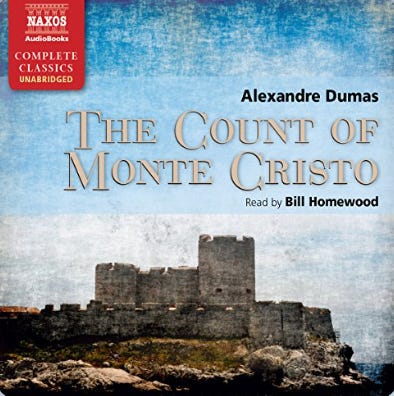
The Count of Monte Cristo, Alexandre Dumas, collaborating with August Maquet
A wrongfully imprisoned sailor takes revenge on his enemies and their families
Before filler arcs in anime, before the expansive and yet largely obsolete cast of characters in HBO’s Game of Thrones, there was volume two of The Count of Monte Cristo. Dumas, supplying the Journal des Débats with daily material for seventeen months, was paid by the word, and thus the temptation to include subplots and side quests proved too great. Book two includes an Orientalist hashish trip, embedded narratives of Italian bandits and a public execution—sensationalist stuff that might appeal to readers swept up in mid-nineteenth-century Romanticism. Unfortunately, these digressions were tedious, especially since the book already tested my patience by being heavy on dialogue in the first few chapters and having, as its premise, a revenge plot more convoluted than the UK tax system.

Now, I’d be a cold-hearted critic indeed to claim my experience of The Count was all frustration and no fun. The digressions weren’t all bad: the book turned out to be an unexpectedly great Pride month read thanks to the cross-dressing sapphic queen, Eugénie, who doesn’t give a damn what any other character in the narrative wants her to do and escapes to Belgium with her lover.
In volume three, the Count’s long-awaited revenge gathers momentum. There’s a wonderful exchange between the Count and his former fiancée, Mercédès, now married to one of his enemies, which dramatises the truth they both know but don’t want to admit. As this momentous book progresses, we see the Count’s conviction that the sins of the father must be visited upon the son crumble, his hubris turn to humility. The central conflict shifts, from Edmond Dantès (aka the Count) versus the men who landed him in prison, to the conflicting forces of mercy and vengeance at work in the Count’s soul. This interior battle propels the revenge tale into modernity, though the Count’s emotions in other places, particularly with regards to his adopted daughter/slave/lover Haydée remain bizarrely under-explored.
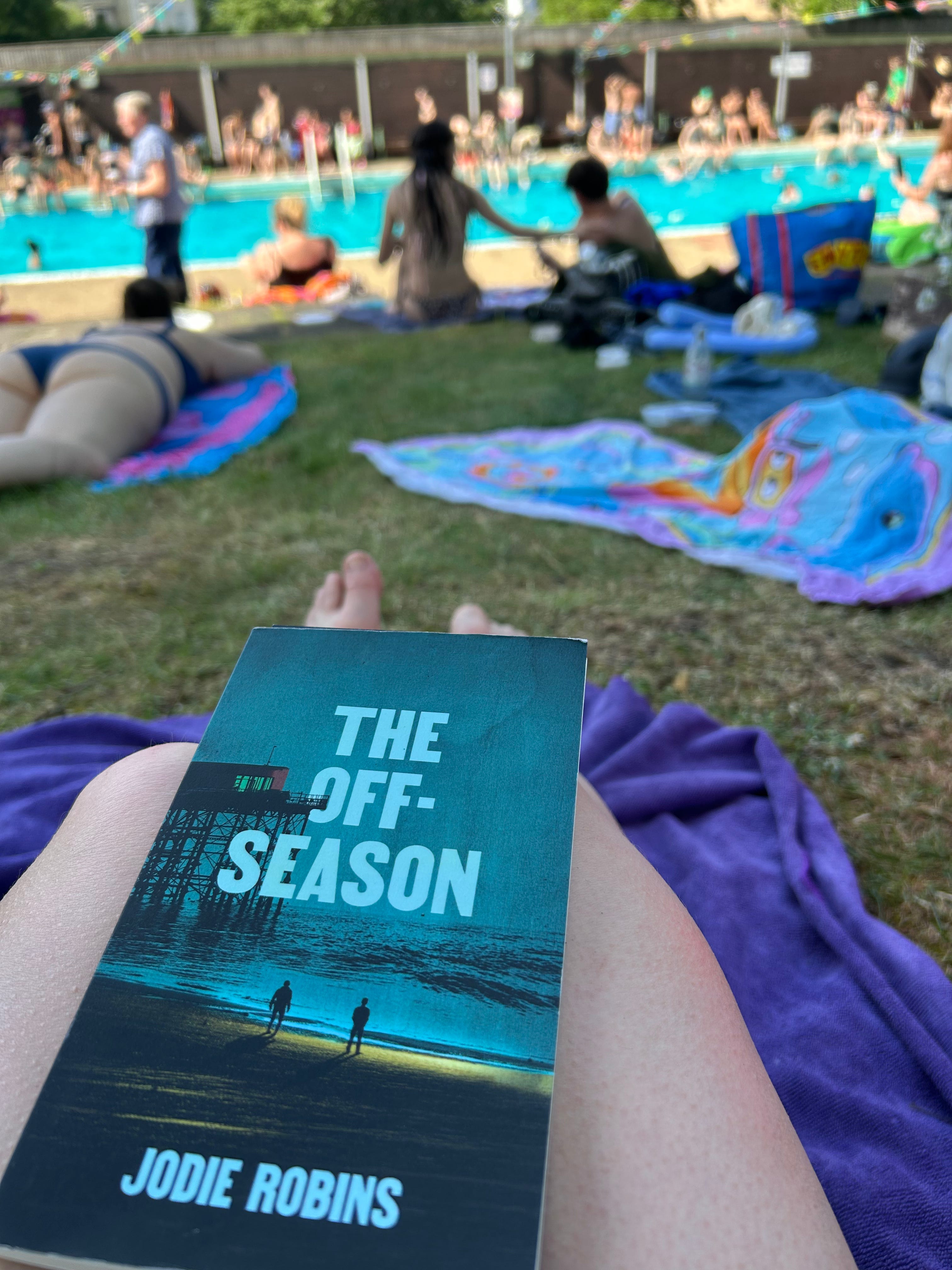
The Off-Season, Jodie Robins
An estranged father and son are brought together when a strange entourage arrives at Blackpool seafront
A novella published as part of the Wild Hunt’s Northern Weird series, this slice of Blackpool life is one to read on a rainy day, preferably with a cup of builder’s tea and the melancholic chime of an ice cream van playing just within earshot.
The unsettling nature of ‘The Off-Season,’ a company of travelling entertainers who distract townsfolk from mundanity and misery a little too well, is most evocative in the last few pages. However, the main characters of father and son don’t get directly involved in the action for a couple of chapters, which is a long time in a book so short. When they do, the author focuses on a clowning sequence. While a curious and, yes, weird way of exploring their dynamics, it doesn’t hint enough at the darkness that lies just around the deckchair.
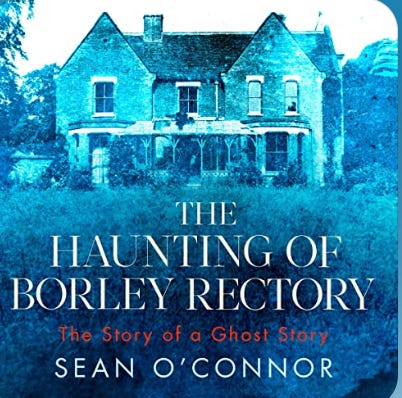
The Haunting of Borley Rectory: The Story of a Ghost Story, Sean O’Connor
‘The most haunted house in England’ under the microscope
Off the back of the recent Uncanny: Cold Cases double bill, I indulged my newfound special interest by reading this detailed chronicle of the most haunted house in England (purportedly). O’Connor offers a largely balanced account, but subtly hints at his sceptical conclusion by allowing the reader to infer the likely truth behind the claims. For instance, shortly after he presents us with Marianne Foyster’s facial injury, supposedly made by a poltergeist, he mentions Marianne’s rough sexual encounters with her lover, Frank Pearless. Dropping sceptical explanations throughout allows him to draw a convincing conclusion that the story of the haunting was the creation of many human minds, beginning with the most fanciful (and perhaps romantically frustrated) of Reverend Henry Bull’s children. He explores the motives behind each resident and visitor’s contribution to the evolving ghost story, unpicking why Mabel Smith, wife of the third Reverend to lodge at the house, would push the narrative of the haunting while she lived there and deny it in later life, setting out what Harry Price sought to gain from stoking the coals of belief, and evaluating how Marianne Foyster used the spectre of the poltergeist to her own advantage.
Satisfying as the debunk is, what makes this account special is O’Connor’s melancholy metanarrative about how Borley haunted the lives of all its residents decades after they moved away. He contrasts the enduring power of the ghost story to the fragility of bricks and mortar, the human body, a moment in time between the two world wars. While the wider context can feel unnecessary at times, the micro- and macrocosm are generally tied together, with Borley functioning as a symbol of the fears and hopes of an uncertain era.

Annihilation, Jeff VanderMeer
Eleven expeditions to the wilderness of Area X have ended in catastrophe. We join the twelfth.
Like the recent blockbuster, The Backrooms, Vandermeer’s novel takes us into a hinterland of mimicry and assimilation. So much of this novel is about what cannot be seen, said or processed, as the protagonist’s emotional and cognitive faculties are baffled by Area X. The gaps in the narrative and the storyteller’s restraint are a form of exquisite cruelty, denying closure. Although VanderMeer didn’t intentionally portray his protagonist as Autistic, it’s interesting to spend an intense time with a female character who is reluctant to open up. When the Crawler gets into her head—a sublime piece of writing—it’s the closest the reader gets to her raw emotion, too.
Because the action is largely concentrated around the Tower and the lighthouse of Area X, and because what happens to the crew seems like a foregone conclusion, the book feels shorter than it actually is—rather like reading a short story or novella. It works as a self-contained narrative, but I felt as though some beats were missing: an encounter with a new character, more focus on the ocean and islands and more interaction with the entities in Area X. It could be that VanderMeer was saving these elements for the next two instalments in the trilogy, but being a serial ‘one and done’ reader, I may never find out.
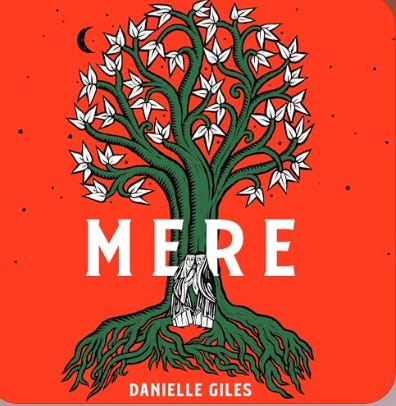
Mere, Danielle Giles
An infirmarium and proud new sister face the mere demon that threatens to destroy their convent.
In a remote part of the Norfolk Fens dwells an amphibious convent, holding within itself the tension between pagan beliefs and Christian faith. The old ways are not quite gone, but neither are they clearly remembered, haunting the narrative like an uncanny double of Christ-worship. The book is fluid, moving between the lay community of churls and thanes, who form part of the convent’s ecosystem, to the lives of the holy sisters… who are often not so holy. This is a nunnery overlooked by the tenth-century reformers, a place of human frailty, desires, pettiness, politics.
As a medievalist, used to studying sanitised saints’ lives, I enjoyed the realness of the community. I also enjoyed the allusions to texts including the Life of Saint Guthlac, Beowulf, the Exeter Book riddles and Sir Gawain and the Green Knight. The mere demon that lurks on the periphery of the narrative recalls Grendel in places, the Green Knight in others. But Giles does something much more interesting than compounding the narrative of the frightening ‘other’. In-keeping with the book’s focus on fluidity, community and accommodation, the ending is all about coexistence, rather than the sacrifice of one ideal for another. This last third of the book is much pacier than the pages that precede—a slow burn is almost inevitable when the characters refuse to discuss the root cause of the curse plaguing the convent. Around the middle, I wasn’t sure if the folk horror element would come to the fore. But the dénouement—strange, frightening and beautiful—is well worth the build-up.
If you fancy reading and reviewing my forthcoming folk horror, The Brink, it is available on Edelweiss, NetGalley and NetGalley UK.